
A Practical Guide Solar System Size for Queensland Homeowners
Choosing the right solar system size starts with understanding your electricity usage, roof space and future energy needs. Here is what to consider before selecting a system for your home.
Introduction
When exploring solar, one of the first questions homeowners ask is: what solar system size do I need?
The answer depends on more than the number of people living in your home. Your daily electricity consumption, the time you use power, your roof and your budget all influence the design.
A suitable system should reflect how your household uses electricity today while considering any changes you expect in the future.
Understanding Solar System Size
Solar system capacity is measured in kilowatts, or kW. This describes the combined rated capacity of the solar panels.
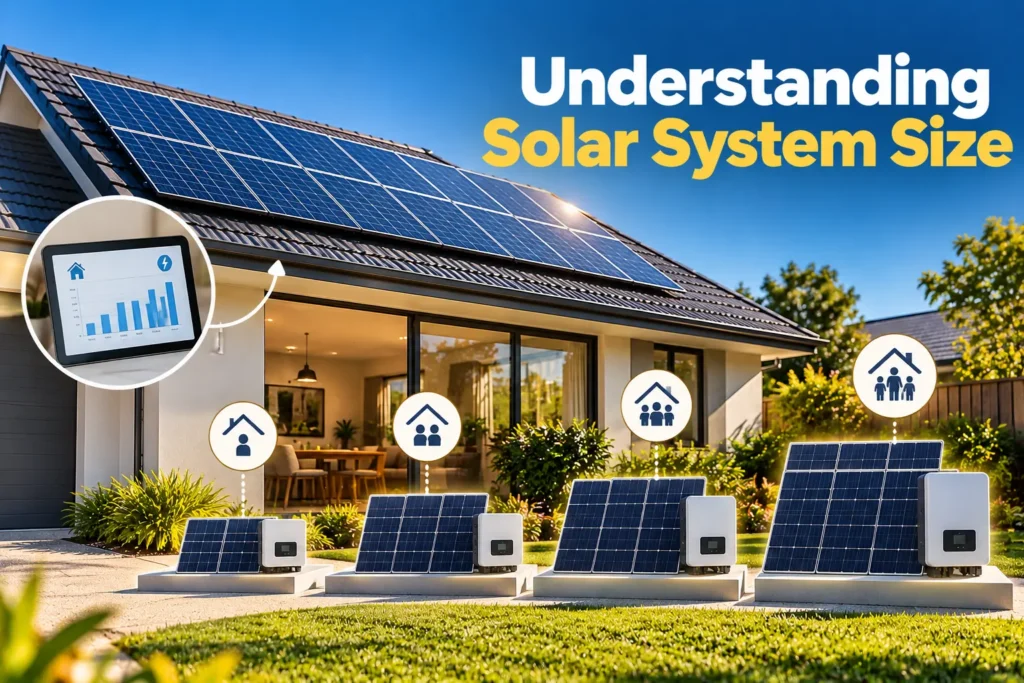
For example, 20 panels rated at 440 watts each provide a combined array capacity of 8.8 kW.
Electricity generated or consumed over time is measured in kilowatt-hours, or kWh. Your electricity bill shows consumption in kWh, which helps your installer assess your energy needs.
A system’s kW rating does not mean it will produce that level of power throughout the day. Actual output varies with sunlight, shading, temperature and other conditions. This is the must know thing before choosing the right solar system size.
Start With Your Electricity Bills
Gather recent electricity bills, ideally covering different seasons. Look for:
- Total electricity consumption in kWh.
- Average daily consumption.
- Electricity usage rates.
- Your tariff structure.
- Any existing solar export credits.
If you have smart-meter data, this can provide a clearer picture of when your household uses electricity.
Your bill amount alone does not tell the whole story because it also includes tariffs, supply charges and other adjustments. every house hold must calculate their electricity bill before choosing any solar system because solar system size may vary by electricity usage.
Consider When You Use Electricity
Two homes can use similar amounts of electricity but benefit from different solar designs.
A household with people working from home may use more electricity during daylight hours. Another household may use most of its electricity after sunset.
Tell your installer when you usually run major appliances, including air conditioning, pool pumps, hot-water equipment and EV chargers. if you looking for EV chargers visit our wide range of EV chargers we have.
Understanding this pattern helps assess how much solar electricity you could use directly.
Check Your Roof Space and Shading
The amount of suitable roof space affects the panel layout and available system capacity.
Your installer should assess roof condition, orientation, pitch and shading from nearby trees or buildings. Skylights, vents and other roof features also need to be considered.
Ask to see a proposed panel layout so you can understand where the equipment will be installed and why those roof sections have been selected.
Understand Panel and Inverter Capacity
Your quote may show different capacity figures for the solar panels and inverter.
These components perform different roles, and their ratings do not always need to match. Ask your installer to explain the proposed combination and confirm that it meets the applicable equipment and connection requirements.
Also ask about network export conditions. The capacity installed on your roof and the amount you are permitted to export to the grid are separate considerations.
Plan for Future Energy Needs
Your electricity needs may change over the life of your solar system.
Mention any plans to:
- Purchase an electric vehicle.
- Install a home battery.
- Add air conditioning.
- Switch to electric hot water or cooking.
- Increase household occupancy.
Request a comparison between a system for your current needs and an option that allows for these changes.
Choosing a System That Suits Your Home
A larger system may provide additional generation, but the extra capacity should be assessed against its cost and expected value.
Ask your installer to explain the recommended size, estimated annual generation and assumptions behind projected savings.
Find the Right Solar System Size for Your Property
Contact Go Run Solar with your recent electricity bills and future energy plans. Discuss a system designed around your household and roof.