
A Guide to Solar Battery Storage for Queensland Homeowners
A home battery can store solar electricity for later use. Find out what to consider before adding storage to your existing or planned solar system.
Introduction
Solar panels generate electricity during daylight hours, but your household may use much of its power in the evening.
A home battery can help bridge that gap by storing surplus solar electricity for later. For some households, this can reduce grid purchases and provide useful flexibility.
However, a battery adds to the cost of your system. The right decision depends on your electricity usage, available solar generation, budget and backup requirements.
How Does a Solar Home Battery Work?
When your solar panels generate more electricity than your home needs, a compatible battery system can store some of that surplus.
The stored electricity can then supply your home later, subject to the system’s capacity, power limits and operating settings.
This can help you use more of the electricity generated on your own roof.
Start With Your Energy Goals
Before comparing batteries, identify what you want to achieve.
Your priorities may include:
- Using more of your solar generation.
- Reducing electricity purchases in the evening.
- Managing electricity costs under your tariff.
- Providing backup for selected appliances.
- Preparing for future household energy needs.
These priorities help your installer assess the equipment and configuration that may suit your home. visit our wide range of solar batteries.
Review Your Solar Surplus and Evening Usage
A battery assessment should consider both the energy available to charge it and the electricity you are likely to use afterwards.
Review your solar generation, grid exports and evening electricity imports across different seasons.
If you already have monitoring, share that information with your installer. Ask for an estimate based on your actual usage rather than a general household example.
Understand Battery Capacity and Power
Battery specifications commonly include two different measurements.
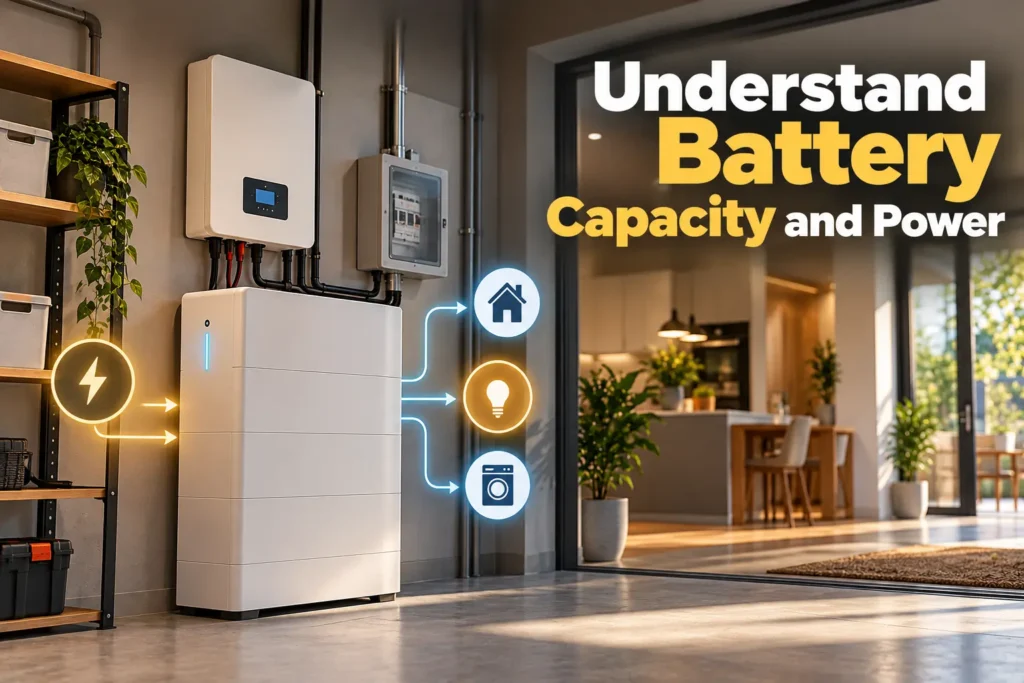
Usable capacity, measured in kWh, describes the amount of energy available within the battery’s specified operating limits.
Power output, measured in kW, affects how much electricity the battery can supply at one time.
Both matter. A battery may store enough energy for several hours of lighter use while still having limits on the appliances it can operate simultaneously.
Ask your installer to explain these figures using examples from your own household.
Will a Battery Work During a Blackout?
Not every battery installation provides backup power.
Blackout operation requires suitable equipment and a system designed and configured for that purpose. Some installations support selected circuits, while others may offer broader backup capability within their operating limits.
Before accepting a quote, ask:
- Which circuits will operate during an outage?
- Which appliances can run together?
- Can the solar panels recharge the battery during an outage?
- What happens when the battery reaches its minimum charge?
- What additional equipment is included for backup?
Request the proposed backup scope in writing.
Can You Add a Battery to Existing Solar?
It may be possible to add storage to your current installation, but compatibility needs to be assessed.
Provide your installer with the inverter model, panel details and any available system documentation.
Ask whether additional equipment or changes are required and how the battery will be monitored and controlled.
Compare the Costs and Expected Benefits
Request a written comparison showing the additional installed battery cost and its estimated benefit.
Check the assumptions for electricity prices, solar surplus, battery usage and any included incentives. Review warranty conditions and any ongoing charges associated with optional services.
A battery may offer benefits beyond bill savings, such as backup capability. Consider how much those features matter to your household alongside the financial estimate.
Choose a Battery Around Your Home
The biggest battery is not automatically the most suitable choice.
A useful recommendation balances your charging opportunities, expected consumption, power requirements and budget. It should also explain where the battery will be installed and how you will receive support.
Explore Your Home Battery Options
Contact Go Run Solar to discuss your electricity usage, existing solar equipment and backup priorities.