
Introduction
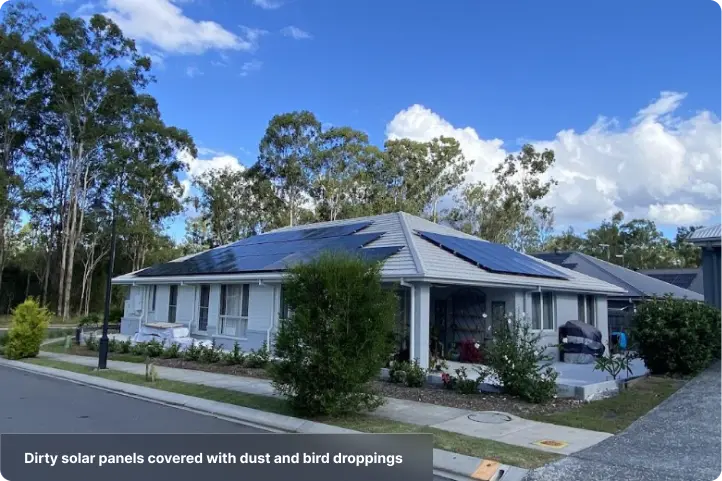
If you’ve noticed dust, leaves, bird droppings, or debris building up on your solar panels, you may be wondering how do you clean solar panels on roof safely without causing damage.
Queensland’s sunny climate is ideal for solar energy, but weather conditions such as dust, coastal salt, pollen, heavy rain, and bird activity can leave residue on your panels over time. While rainfall often helps remove light dirt, it isn’t always enough to keep your system operating at its best.
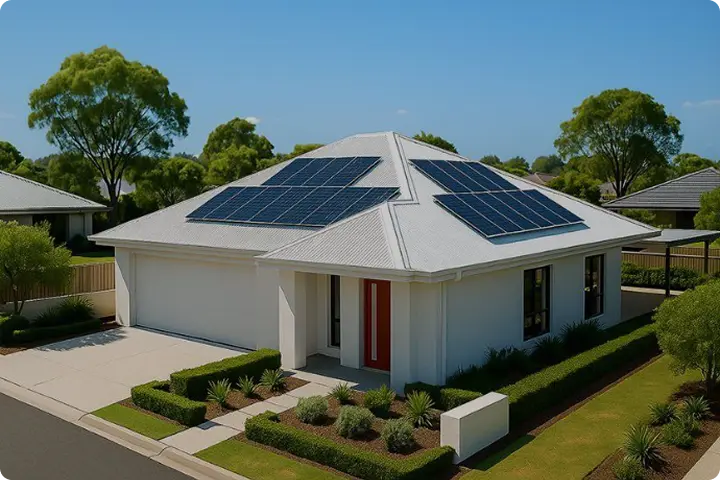
In this guide, we’ll explain how to clean solar panels on a roof, when cleaning is necessary, how often Queensland homeowners should inspect their systems, and when it’s safer to hire a professional.
Do You Need to Clean Solar Panels?
Many homeowners ask, do you need to clean solar panels?
The answer depends on where you live and your surroundings.
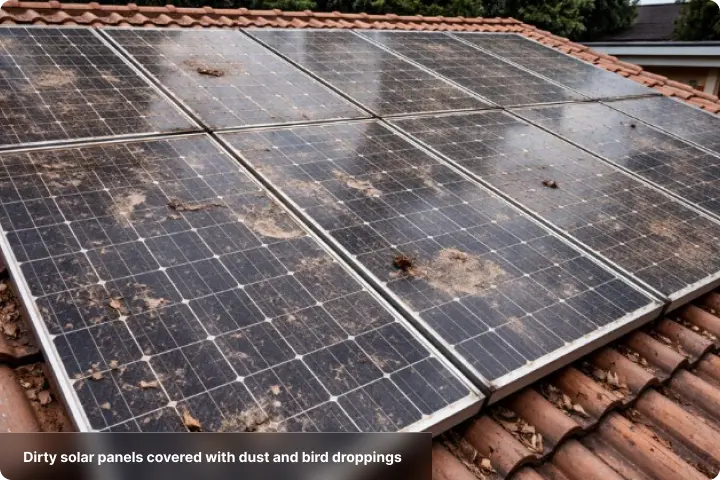
In Queensland, solar panels may collect:
- Dust during dry weather
- Bird droppings
- Tree sap
- Fallen leaves
- Pollen
- Coastal salt deposits
- Storm debris
Although solar panels are designed to withstand outdoor conditions, heavy dirt accumulation can block sunlight from reaching the solar cells, reducing energy production.
For many homes, natural rainfall removes light dirt, but stubborn debris often requires manual cleaning or professional maintenance.
Why Solar Panels Gets Dirty in Queensland?
Dust and Dry Conditions
Long periods without rain can leave a layer of dust across your panels.
Coastal Salt
Homes near the coast may experience salt residue, which builds up gradually on panel surfaces.
Bird Activity
Bird droppings are one of the most common causes of localized shading.
Tree Debris
Homes near the coast may experience salt residue, which builds up gradually on panel surfaces.
Storm Season
Strong winds and storms can deposit dirt, branches, and other debris onto your roof.
Regular visual inspections help identify these issues before they affect performance.
How to Clean Solar Panels on a Roof Safely
If you’re wondering how to clean solar panels on a roof, safety should always come first.
Step 1: Turn Off the Solar System
Follow your manufacturer’s shutdown procedure before cleaning.
Step 2: Choose the Right Time
Clean panels:
- Early Morning
- Late Afternoon
- On a cool, cloudy day
Avoid cleaning hot panels, as sudden temperature changes may stress the glass.
Step 3: Remove Loose Dirt
Use a soft brush or gentle stream of water to remove loose dust and leaves.
Step 4: Wash with Clean Water
Use Clean water and a soft songe or microfibers cloth, if required, use a milld, non-abrasive soap diluted in water.
Step 5: Rinse Thoroughly
Follow your manufacturer’s shutdown procedure before cleaning.
Step 6: Allow Panels to Dry Naturally
Avoid wiping aggressively, which may scratch protective coatings.
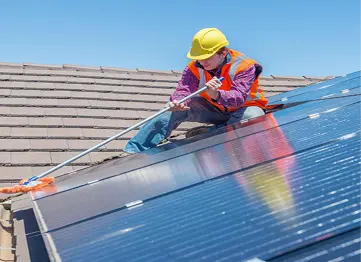
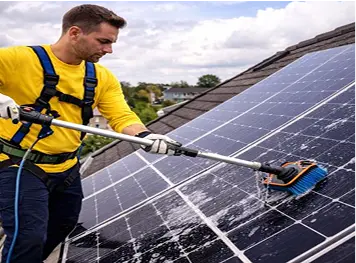
Safe cleaning of rooftop solar panels using a soft brush
Equipment You’ll Need
Using the correct equipment helps protect your investment.
Recommended tools include:
- Soft Brush
- Soft Sponge
- Microfibre Cloth
- Garden Hose
- Bucket of clean water
- Mild Soap (if required)
- Safety harness (for roof access)
Avoid Using:
- Pressure washers
- Abrasive brushes
- Steel Wool
- Strong chemical cleaners
- Sharp tools
These can permanently damage the protective glass coating.
What You Should Never Do
When learning how to clean solar roof panels, it’s equally important to understand what not to do.
Avoid these common mistakes:
- Walking directly on solar panels
- Cleaning panels during the hottest part of the day
- Using harsh chemicals
- Scraping bird droppings with metal objects
- Spraying high-pressure water directly onto panels
- Working on steep roofs without proper safety equipment
If your roof is difficult to access, professional cleaning is the safer option.
How Often Should Solar Panels Be Cleaned in Queensland?
There’s no universal schedule.
Most Queensland homes benefit from:
- Visual inspection every 3–6 months
- Cleaning when noticeable dirt accumulates
- Additional inspections after storms
- More frequent cleaning for coastal or heavily wooded properties
Monitoring your solar production can also help identify when dirt may be affecting performance.
DIY vs Professional Solar Panel Cleaning
| DIY Cleaning | Professional Cleaning |
|---|---|
| Suitable for single-storey homes | Suitable for all roof types |
| Lower upfront cost | Safer for steep roofs |
| Requires proper equipment | Uses specialised cleaning tools |
| May miss hidden issues | Includes visual inspection of the system |
| Safety risks on high roofs | Reduced risk for homeowners |
Professional maintenance is particularly recommended for:
- Double-storey homes
- Steep roofs
- Commercial buildings
- Coastal properties
- Older solar installations
Monitoring your solar production can also help identify when dirt may be affecting performance.
Signs Your Solar Panels Need Cleaning
Your solar panels may require cleaning if you notice:
- Visible dirt or bird droppings
- Heavy leaf accumulation
- Lower-than-usual electricity generation
- Uneven dirt patches
- Storm debris covering panels
Regular monitoring helps maintain consistent solar performance throughout the year.
Final Thoughts
Knowing how do you clean solar panels on roof can help you maintain your solar system and keep it performing efficiently throughout Queensland’s changing weather conditions.
While many homeowners can safely remove light dirt from accessible panels, roof safety should always come first. If your panels are difficult to reach or require more thorough maintenance, professional solar cleaning is often the safest and most effective solution.
Regular inspections, safe cleaning practices, and timely maintenance can help protect your investment and support reliable energy production for years to come.


